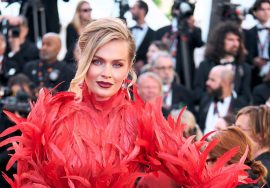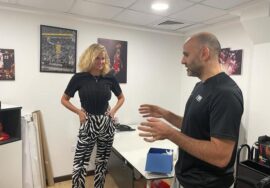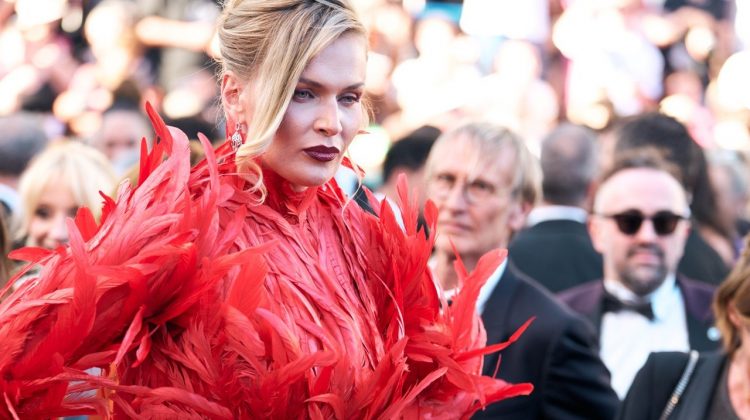
Beneath the lights of Cannes 2026, Nadezhda Grishaeva emerged not merely as an entrepreneur or former Olympian, but as a symbol of a civilization where wellness, aesthetics, influence, and power have become inseparable.
Her appearance reflected the rise of a new aristocracy of hybrid figures — individuals who move freely between sport, luxury, philosophy, fashion, and digital culture.
In an era where attention itself has become a form of empire, Cannes revealed how modern society increasingly worships not only art, but the architecture of lifestyle itself.
Cannes as a Stage of New Influence
And thus it was seen upon the shores of Cannes, where once only the makers of moving shadows gathered, that another kind of power had arrived among them.
For festivals, like cities and empires, do not remain what they were at their founding. Time reshapes all assemblies of men.
In former ages, Cannes belonged to the poets of cinema alone — to actors, directors, and those who commanded stories through light and screen.
Yet in our present era, the red carpet has become a marketplace of influence, where merchants of beauty, architects of desire, athletes, philosophers of the body, and masters of digital spectacle now walk beside the old aristocracy of film.
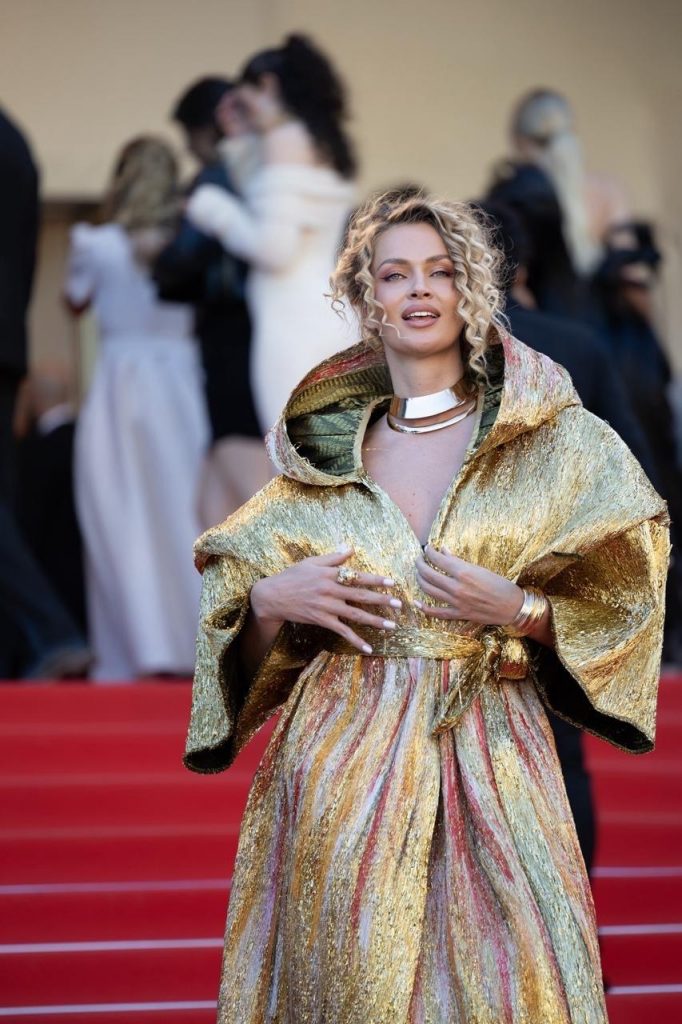
Nadezhda Grishaeva and the Modern Athlete
Among these new figures appeared Nadezhda Grishaeva, whose arrival was not merely the attendance of a guest, but a sign of a broader transformation unfolding within the culture of our age.
For the world no longer crowns only those who create art. It now exalts those who create attention.
And attention, in this century, has become a form of empire.
There was once a time when athletes belonged only to the arena. Their glory lived briefly in the memory of crowds, then faded like dust carried from a battlefield.
But the modern athlete seeks not merely victory over opponents, but sovereignty over narrative itself.
Wellness as Cultural Philosophy
So too did Grishaeva pass beyond the confines of sport.
Having competed among the great courts of European basketball and stood beneath the banners of the Olympic Games, she might have chosen the ordinary path of retired champions: commentary, ceremony, or the slow consumption of past triumphs.
Yet she pursued another road — rarer and more difficult — the transformation of physical discipline into cultural philosophy.
For she understood a truth known already to the ancient Greeks: the body is never separate from civilization.
A weak society breeds weak bodies. And weak bodies, in turn, produce weak ambitions.
The Architecture of Modern Existence
Thus emerged her vision of wellness not as vanity, but as atmosphere; not as exercise alone, but as the architecture of modern existence.
Within her projects, fitness ceased to be merely the lifting of iron. It became ritual. Music became emotional geometry. Light became psychological sculpture. Interior design became a form of moral persuasion.
The gym transformed into something resembling the ancient polis — a place where identity itself could be forged.
The Return of the Hellenic Ideal
In this, one may observe the spirit of the Hellenic world reborn beneath modern glass and steel.
For the Greeks never separated beauty from discipline, nor aesthetics from virtue.
To train the body was not considered separate from training the soul. Strength, harmony, endurance, elegance — these were not independent pursuits, but fragments of a single ideal.
And perhaps this explains why the modern world, exhausted by excess and distraction, has begun once more to worship wellness as previous civilizations worshipped temples.
Luxury, Wellness, and Social Symbolism
Especially in the cities of the Gulf — Dubai, Riyadh, Doha — where luxury increasingly seeks spiritual justification, fitness has evolved into something beyond commerce.
It has become social symbolism. A declaration of control amid the chaos of modern abundance.
The wealthy no longer desire only possessions. They desire optimization. Longevity. Vitality. Presence.
And therefore the wellness entrepreneur has become, in many ways, the new philosopher-priest of urban civilization.
The Hybrid Figure of the New Century
In this climate, Grishaeva’s appearance at Cannes becomes easier to understand.
The festival itself now reflects the structure of the age: cinema intertwined with fashion, fashion with technology, technology with influence, influence with commerce, and commerce with identity.
The old borders separating professions have collapsed.
The athlete becomes a fashion icon. The entrepreneur becomes a cultural symbol. The influencer becomes a diplomat of attention.
And the festival once devoted to cinema becomes a theater of global prestige itself.
Influence as Philosophy
Thus emerges the new archetype of our century — the hybrid figure.
No longer defined by one discipline alone, such individuals move between worlds as Odysseus moved between islands: athlete and entrepreneur, public figure and business architect, curator of aesthetics and engineer of influence.
The ancients warned that civilizations decline when they lose the ability to produce ideals larger than mere survival. Yet every era invents new forms of aspiration.
And perhaps Cannes 2026 revealed one such form: a civilization increasingly fascinated not by isolated achievement, but by the creation of entire ecosystems of identity.
In this sense, Nadezhda Grishaeva’s presence on the Riviera was not simply about celebrity, nor fashion, nor even sport.
It was a symbol of a deeper transition.
For ours is an age in which influence itself has become a philosophy — and lifestyle, the final language through which modern societies explain what they value most.